Vanguard Shatter
Glass, walls and columns that break and fall on the GPU.
See it in actionFree 7-day trial
Release notes
What's new in 1.7.7
Clusters, like Houdini's Cluster Points.** Sand / snow / soft material is now split into chunks of a size you choose (*Chunk size*), and every chunk gets its own stiffness, density and strength (*Chunk variety*). Soil, snow and asphalt break into lumps and plates of different sizes instead of crumbling evenly.
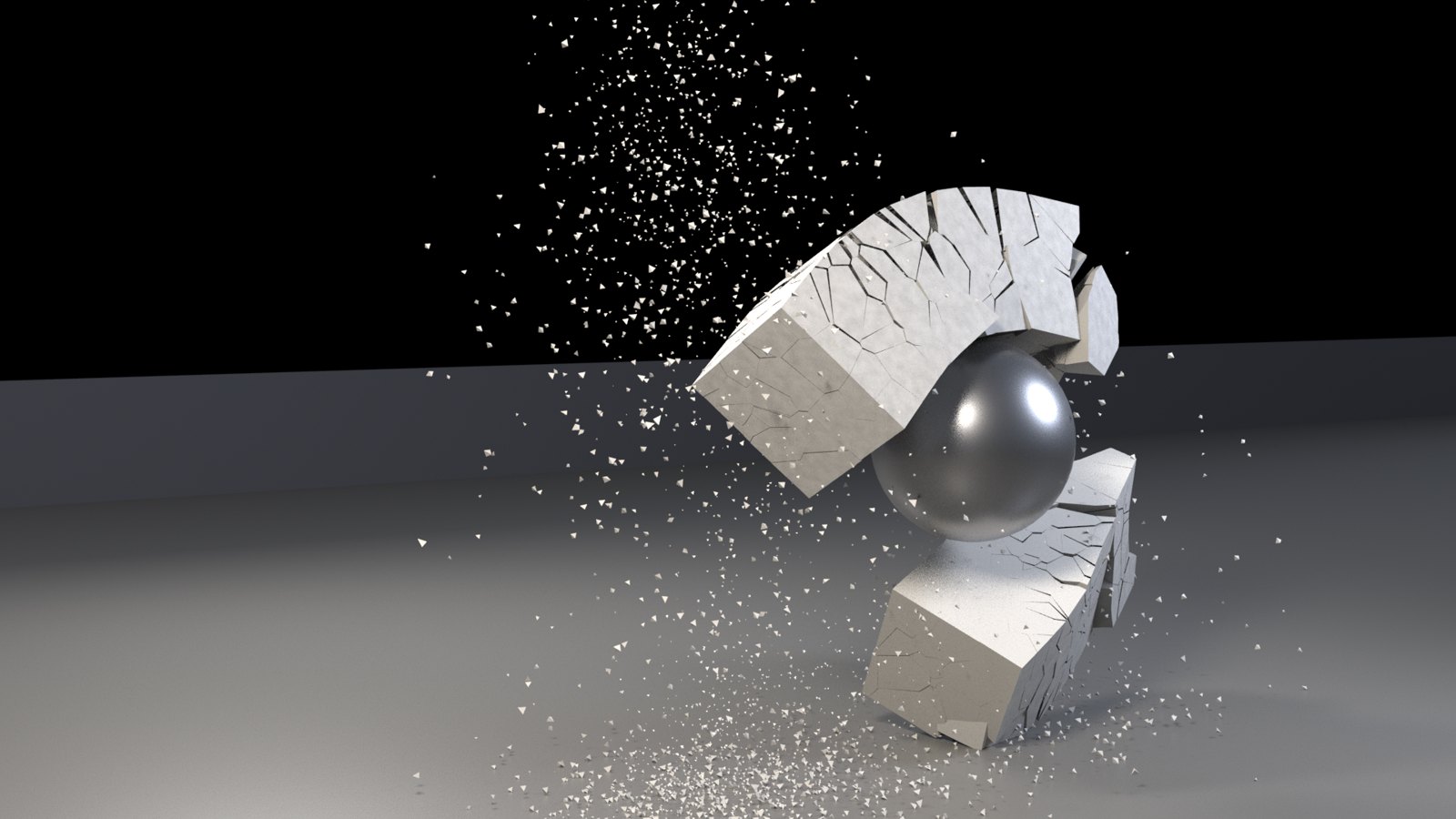
Chunks and grains display.** A new *Show* mode builds a separate surface for every piece that is still whole, so cracks are real gaps, and turns broken material into rubble and grains of varied size, ready to render.
Buried objects push their way out.** No particles are created inside an Impact object, so a ball buried in the ground can be driven up through soil and asphalt. Test scene: a 5 x 5 m road, 1.1 million particles, 40 frames in under 2.5 minutes on the GPU.
No more rows in the rubble.** Particles start on a slightly jittered grid, so debris no longer shows the lattice it was made from.
What's new in 1.7.6
Roads, slabs and soil that break for real.** Turn on *Top layer* in Sand / snow / soft: the top of the object becomes asphalt, a concrete slab or a frozen crust over the soil. Hit it and the slab cracks radially from the impact along natural seams, with broken asphalt in the cracks and whole plates in between, while cohesive soil underneath gives way in lumps instead of pouring. A 5 x 5 m road (558,000 particles) simulates in under a minute on the GPU.
See the cracks.** A new particle colour shows intact material white and cracked material red; the slab and the soil get their own material IDs for rendering.
What is MPM?** The user guide now explains the Material Point Method, the papers Shatter's solver is built on, and every new control.
What's new in 1.7.5
Locked down.** The plugin no longer exposes any part of its fracture engine to other programs: everything it does now goes through your licence. Recommended for everyone on 1.7.4.
What's new in 1.7.4
PhysX cloth.** Tick PhysX cloth on any mesh: flags, awnings, curtains, tablecloths. Pinned by City's VanguardClothPin (or your selected vertices), blown by a Tornado wind file and pushed by Vanguard Fluid water. A whole City street of 2,000 awnings runs together in one GPU simulation.
Watch it as it plays.** With Simulate while the timeline plays on, sand, snow, soft bodies and cloth now simulate in the background as you press Play, like tyFlow - change a setting and it starts again by itself.
See what the particles do.** New display options: points, particle size, and colour by speed, height or direction of travel.
Soft bodies that keep to themselves.** PhysX soft bodies now collide with themselves on the GPU, and a new Show option draws the surface round the particles, which can never pass through itself.
Made for Vanguard City.** One command sets every detached City part up for what it is (glass, facade, roof, car, tree, pole, cloth); steel follows City's real columns; pieces float or sink in water by their own density.
What's new in 1.7.3
PhysX 5.6 soft bodies and grains.** In Sand / snow / soft, set Engine to PhysX 5.6 GPU: a soft body becomes a real PhysX FEM body (tetrahedra, it squashes and springs back), sand and snow become PhysX PBD grains. NVIDIA GPU only; Shatter MPM stays the default and still runs everywhere.
NVIDIA Blast as a fracture engine.** Engine: Shatter, Blast Voronoi or Blast noisy slicing - Blast cuts with rough, natural faces and builds its own bonds.
Glue clusters.** Pieces glued into chunks: by size, finer near the impact, or two levels (big chunks that break into medium ones). The colour preview shows the chunks before you simulate.
Rough broken faces (Roughness) and rebar that stays in its column**: steel bars and ties inside the concrete, rusty stubs where it breaks. The 1.7.1/1.7.2 bug that could fling pieces far away is fixed.
Physics on: Auto / CPU / GPU.** Auto uses the GPU from 512 pieces; you can force either.
What's new in 1.7.2
Several sand, snow and soft objects together.** Select up to four MPM objects and press SIMULATE: they share one simulation and push on each other, each with its own material - a jelly lands on a sand pile and stays on top of it.
Cohesion that means what it says.** 0 is dry sand, 0.5 wet sand that holds a tower, 1 clay. Before, 0.3 turned sand into a solid log.
Snow no longer blows up** when something hits it hard.
MPM presets and two sample scenes.** Start from now has wet sand at normal (fast) and high resolution (final), snow and jelly; the Samples folder has the same scene at both, so the difference is plain.
Fixed:** 3ds Max could crash while closing; overlapping parts attached into one object now fill solid; a soft body with a simple mesh no longer folds into sharp points.
What's new in 1.7.1
Rebar: steel inside concrete.** Cracked concrete stays hanging on its steel, bends and only snaps under a real load, instead of falling apart into loose blocks. Turn it on with *Steel holds cracks* in Glue & Impact.
Simulate to the current frame.** At frame 60 of a 300-frame shot, SIMULATE now computes 60 frames and Play carries on from there, the way tyFlow works. Change a setting mid-timeline and it re-simulates up to where you are, by itself.
Exact collisions.** Pieces fall into bowls, stay inside hollow spheres and roll through tunnels; solid objects keep the fast hull.
See the pieces before you simulate.** Pull them apart and colour each one to judge the cut.
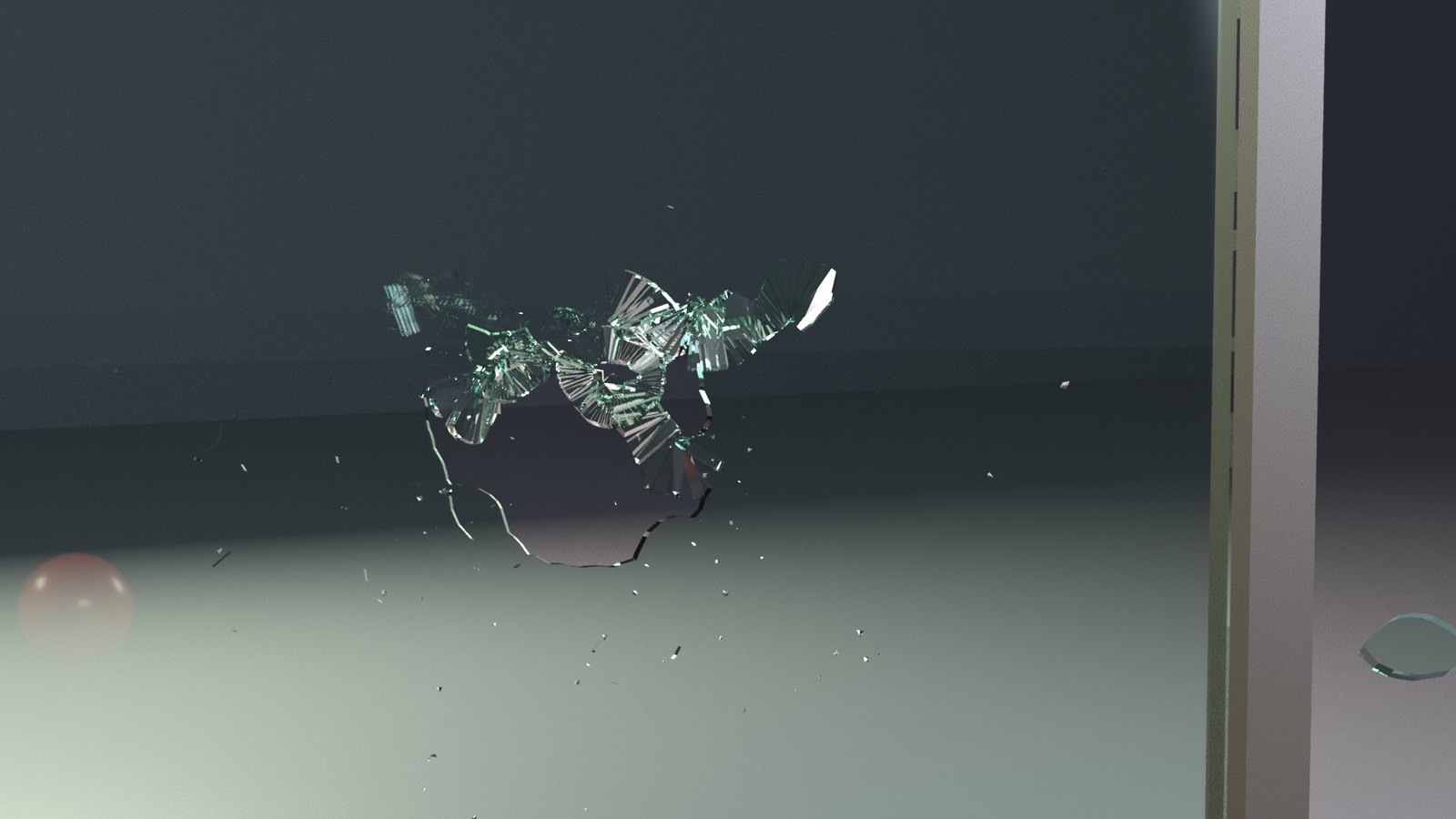
Fixed:** giving an impact object a material after SIMULATE no longer throws the simulation away; glass no longer rides along with the ball that broke it; connected steel no longer buzzes.
Trials end on their last day,** even with the clock wound back.
What's new in 1.7.0
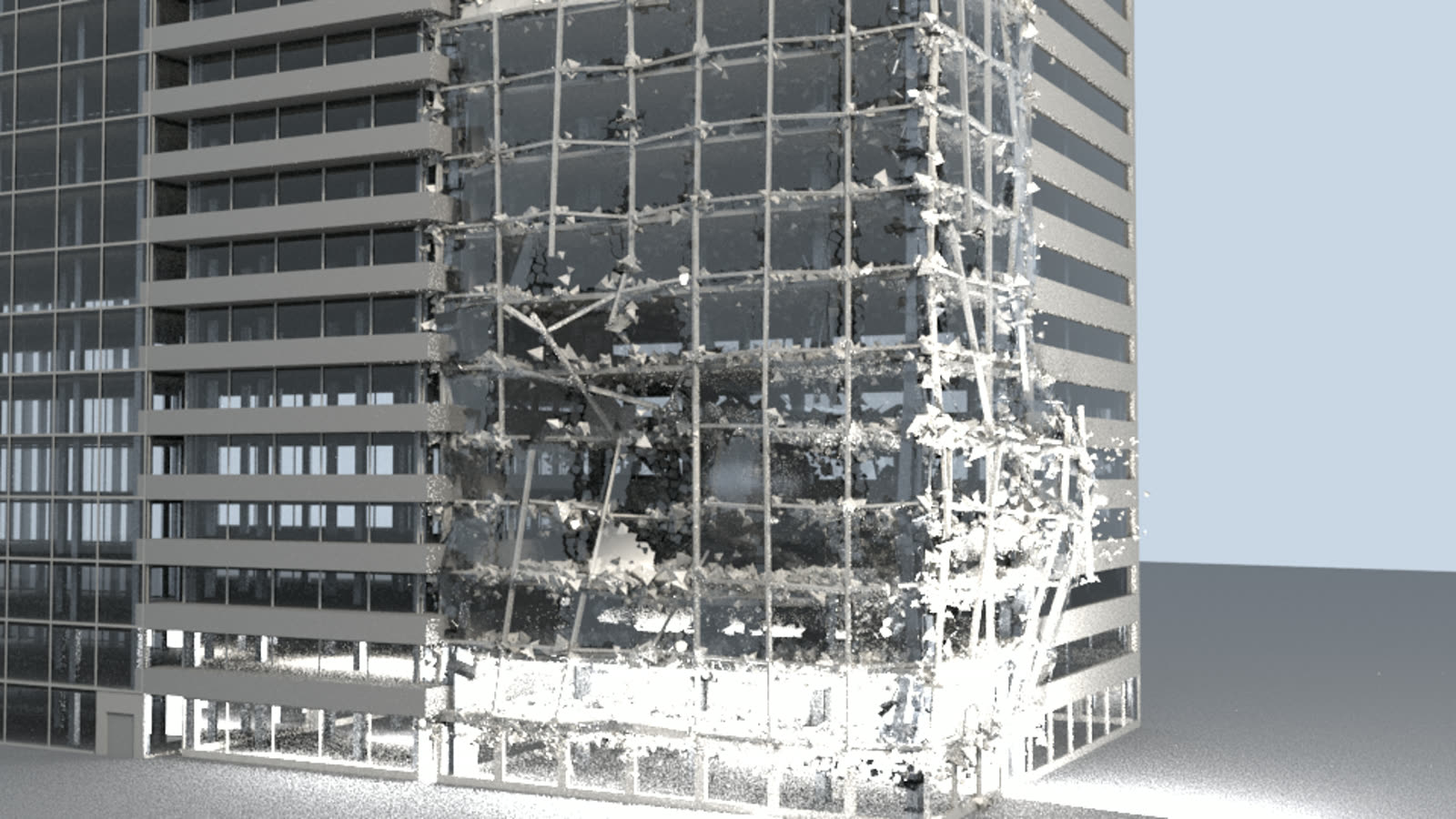
Real rigid-body physics.** Pieces are now solid: every glued cluster is one rigid body with the real shape of its pieces, so walls and columns break where they are hit, clusters split and tumble, and rubble settles instead of wobbling.